



DWP Confirms 25 Skin Conditions That May Qualify for £114 Weekly Payment

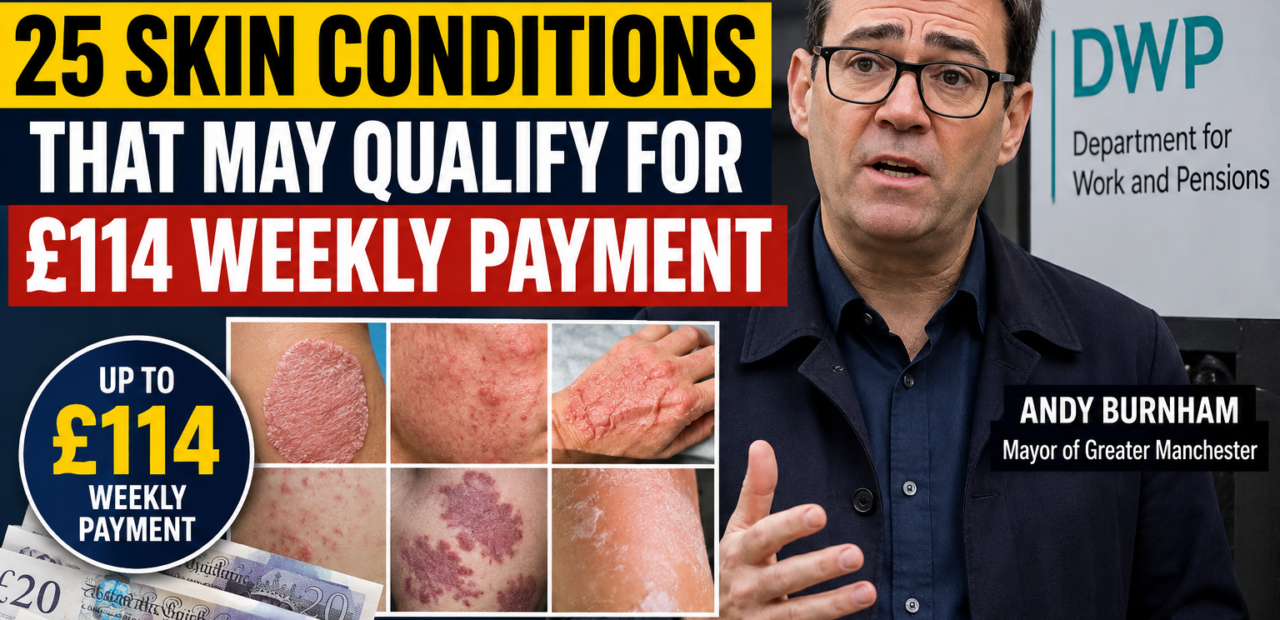
The Department for Work and Pensions has identified 25 skin conditions associated with claims for Personal Independence Payment, commonly known as PIP.
According to the latest DWP figures, 27,391 active PIP claims involved skin-related conditions as of April 2026. Government data also showed that more than four million people were receiving PIP overall during the same period.
PIP is intended to help people manage additional costs arising from a long-term illness, disability or progressive condition. However, having a particular diagnosis does not automatically guarantee entitlement.
How PIP Supports Eligible Claimants
PIP is divided into two components, with the amount awarded depending on how significantly a person’s condition affects their daily life and mobility.
The daily living component is intended for people who need support with everyday activities such as preparing food, washing, dressing, communicating or managing treatment.
The weekly daily living rates are:
| PIP component | Standard rate | Enhanced rate |
|---|---|---|
| Daily living | £76.55 | £114.80 |
| Mobility | £30.20 | £80.10 |
The mobility component is available to people who experience difficulty moving around or planning and following journeys.
Depending on the combination of components awarded, an eligible claimant could receive around £187 each week, equivalent to approximately £748 over a four-week payment period.
PIP Is Not Means-Tested
Eligibility for PIP does not depend on National Insurance contributions, earnings or savings.
This means people may still qualify while working, holding savings or receiving other benefits. The assessment focuses on how a health condition affects a person’s ability to complete specific daily living and mobility activities.
A Diagnosis Does Not Guarantee Payment
PIP is not awarded solely because someone has one of the listed skin conditions. The DWP assesses the practical impact of the condition on the claimant’s everyday independence.
To qualify, a person must generally experience difficulties on more than half the days during a 12-month period. The condition must usually be expected to last for at least 12 months, including the period already experienced.
Full List of Skin Conditions and PIP Claims
The following figures show the number of PIP claims associated with each skin condition as of April 2026:
| Skin condition | Number of claims |
| Cellulitis | 913 |
| Impetigo | None recorded |
| Infections – other or type not known | 332 |
| Acne vulgaris | 21 |
| Varicose eczema | 171 |
| Eczema or dermatitis | 1,519 |
| Papulosquamous and inflammatory rashes – other or type not known | 956 |
| Psoriasis | 2,295 |
| Rosacea | 23 |
| Urticaria | 267 |
| Bullous disease – other or type not known | 143 |
| Dermatitis herpetiformis | 51 |
| Epidermolysis bullosa | 324 |
| Pemphigoid | 32 |
| Pemphigus vulgaris | 34 |
| Blood vessel or lymphatic diseases – other or type not known | 1,193 |
| Arterial leg ulcers | 642 |
| Venous leg ulcers | 1,122 |
| Lymphoedema | 6,447 |
| Pressure sores | 18 |
| Chronic venous insufficiency | 159 |
| Collagen and elastic tissue diseases – other or type not known | 158 |
| Ehlers-Danlos syndrome | 7,386 |
| Burns | 767 |
| Skin disease – other or type not known | 2,399 |
| Total | 27,391 |
Ehlers-Danlos syndrome had the highest number of claims on the list, followed by lymphoedema, unspecified skin diseases and psoriasis.
Thousands of people receive PIP because skin-related conditions significantly affect their daily living or mobility.
Although 25 conditions appear in the DWP data, eligibility depends on the severity and practical impact of the condition rather than the diagnosis alone.
Claimants may qualify for up to £114.80 per week through the enhanced daily living component, with additional mobility support potentially increasing the total payment to around £187 per week.