




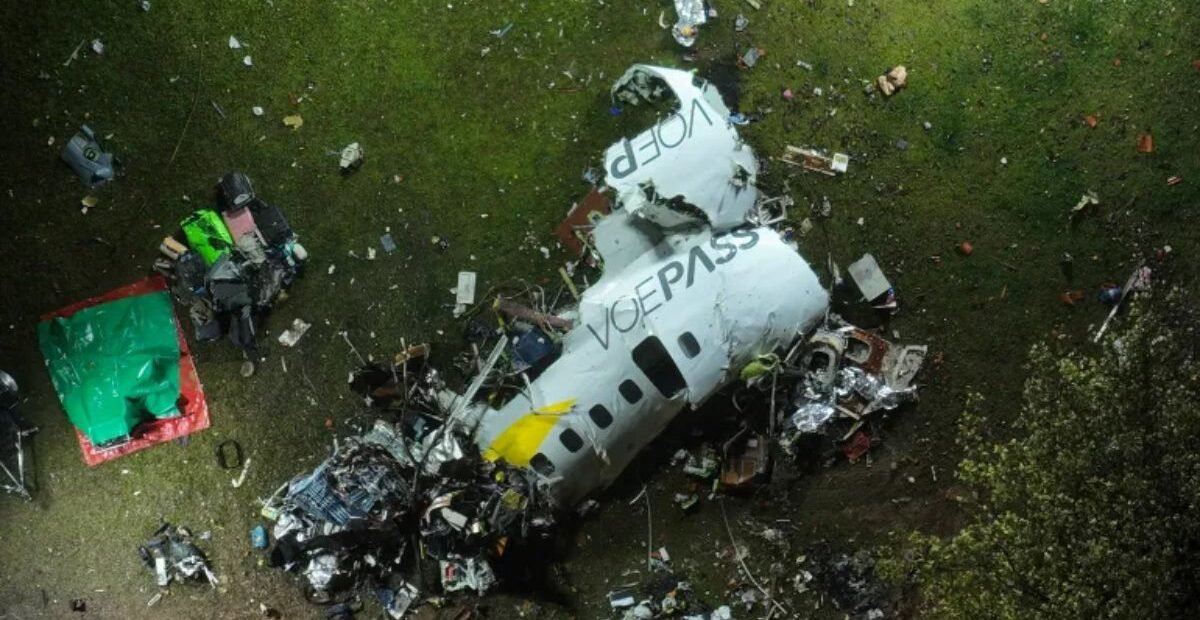
Brazil Investigation Finds Severe Icing Contributed to 2024 Plane Crash That Killed 62

Brazilian Air Force investigators released their findings on Thursday regarding the 2024 Voepass plane crash that killed all 62 people on board near São Paulo.
The investigation determined that severe atmospheric icing, technical failures, crew distraction, and wider safety problems within the airline contributed to Brazil’s deadliest aviation accident since 2007.
Aircraft Crashed in Vinhedo
The Voepass ATR 72-500 twin-turboprop crashed into a residential area in Vinhedo on August 9, 2024.
The aircraft was travelling from Cascavel to São Paulo International Airport when it encountered dangerous weather conditions. None of the passengers or crew members survived the accident.
Severe Icing Caused Aircraft to Lose Lift
According to the investigation, the aircraft experienced intense atmospheric icing while flying at approximately 17,000 feet.
The heavy ice accumulation reduced the plane’s ability to generate lift, eventually causing it to enter an unrecoverable “flat spin” before crashing.
Flight recorder data confirmed that the pilots were aware of significant ice building up on the aircraft’s surface.
De-Icing System Experienced Repeated Failures
Investigators found that the aircraft’s de-icing system suffered recurring technical problems during the flight. The crew repeatedly turned the system on and off during critical stages of the journey.
The report also revealed that problems with the de-icing equipment had been identified before takeoff but were allowed to continue without being fully resolved.
Investigators Highlight Safety Culture Concerns
During a press conference in Brasília, investigators described a wider “culture of normalizing deviations” within Voepass.
This meant that known mechanical issues and departures from proper safety procedures had reportedly become accepted as routine rather than being treated as serious risks requiring immediate correction.
Crew Distraction Delayed Corrective Action
The investigation also found that the pilots were distracted by regular radio communications and administrative responsibilities while severe icing warnings were active.
As a result, the crew failed to carry out corrective manoeuvres quickly enough to prevent the aircraft from losing control.
The investigation concluded that the Voepass crash was not caused by a single failure. Severe icing, repeated de-icing system faults, delayed pilot responses, and the airline’s tolerance of known mechanical problems combined to create a fatal situation.
The findings highlight the importance of strict maintenance standards, timely cockpit decisions, and strong safety procedures in preventing similar aviation disasters.