




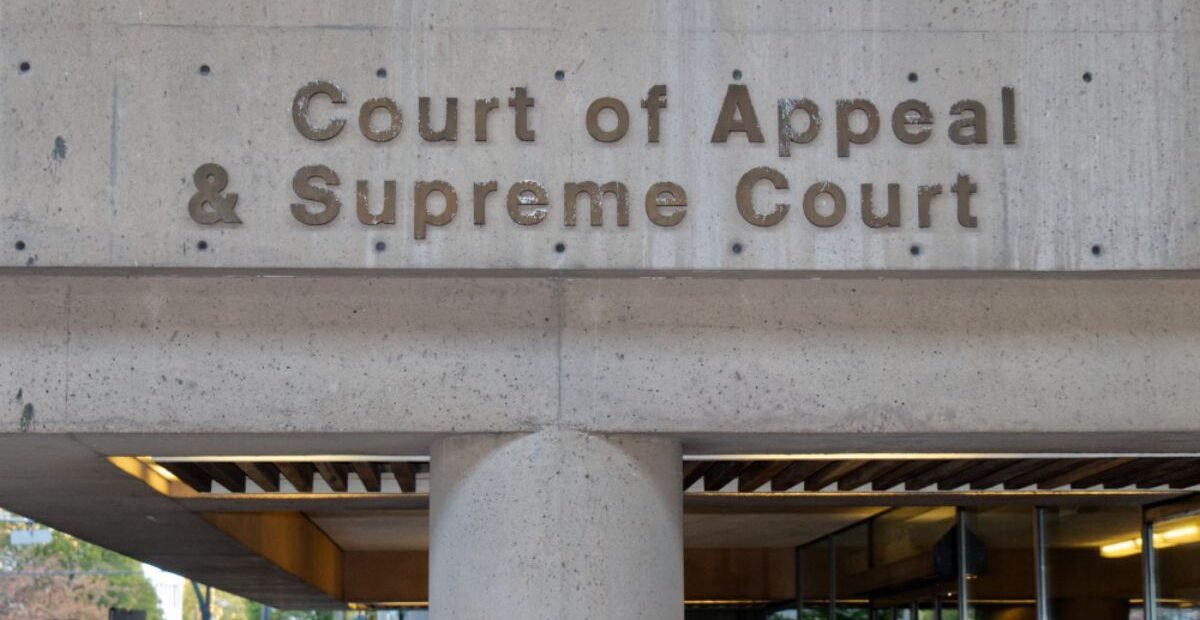
$970,000 Award Over Private Investment Overturned by B.C. Appeal Court

The British Columbia Court of Appeal has overturned a roughly $970,000 award in a private investment dispute, ruling that the case was not suitable to be decided through a summary trial.
The decision, released on July 2, 2026, set aside a February 2025 judgment that had awarded damages to an investor for breach of contract, along with about $276,000 for legal costs connected to an earlier oppression proceeding.
Appeal Court Sends Case Back to Trial Court
The Court of Appeal returned the matter to the lower court, finding that the evidence before the chambers judge was too limited to fairly resolve the dispute.
The appeal panel said the case required a fuller trial process because the record was incomplete and several key facts remained unclear.
Dispute Began With 2018 Private Investment
The case began with transactions dating back to 2018, when the controlling shareholder of a private company encouraged the investor to buy into the business.
The investor eventually acquired 45 per cent of the company.
The company owned a property in White Rock that operated as a motel and restaurant.
Poor Documentation Became Central Issue
The appeal court noted that the parties’ business dealings were poorly documented.
It also said the governing agreements were not drafted using the usual conventions found in Canadian legal documents.
This lack of clear paperwork became a major problem when the relationship between the parties broke down.
Company Assets Sold in 2020
After the relationship soured, the company’s assets were sold in March 2020 for about $7.7 million.
The investor later launched multiple legal proceedings.
In the action under appeal, filed on June 22, 2022, she argued that an oppression remedy she had already obtained did not fully compensate her for losses allegedly caused by the shareholder’s breaches of contract.
Chambers Judge Awarded Nearly $971,000
A chambers judge accepted the investor’s claim during a summary trial.
The judge awarded $970,708.39 in principal and interest.
That award was based on the finding that the investor had contributed $1,495,820 toward two share purchases.
The judge also ordered the shareholder to pay a $275,820.32 indemnity for legal fees tied to the earlier oppression proceeding.
Appeal Court Says Findings Could Not Stand
The Court of Appeal found that the lower court’s conclusions could not stand based on the available evidence.
Writing for a unanimous panel, Justice Gomery said the written agreements did not clearly require the shareholder to buy back a second 20 per cent block of shares that the investor acquired in 2019.
The court also found that the oral evidence on that issue was incomplete and unclear.
Fresh Evidence Changed the Analysis
Fresh evidence played an important role in the appeal.
Earlier affidavits showed that the investor had withheld $70,000 from one payment while claiming a credit the court said she was not entitled to.
The evidence also showed that part of the disputed $640,820 amount had already been counted toward an earlier purchase.
As a result, the appeal court found that the damages and interest calculations had been overstated.
Court Raises Concern About Candour
The appeal panel also emphasized the importance of being fully candid with the court.
Justice Gomery wrote that the investor did not intend to mislead the chambers judge, but that the result was still misleading.
The comment underlined the need for parties to present accurate and complete financial information, especially in private investment disputes.
Legal Fee Award Also Questioned
The Court of Appeal also reviewed the legal fee indemnity from the oppression proceeding.
It said the trial judge should have examined whether each cost actually flowed from a covered breach of contract.
Instead, the lower court allowed close to the full amount without enough analysis.
Important Lesson for Private Investments
The ruling offers a clear warning for advisors, investors and companies involved in private business deals.
Guarantees, repayment promises and share buyback obligations may carry little weight if they are not clearly written and properly documented.
The case also shows that a claim based on uncertain figures can fall apart even after an initial courtroom victory.
The B.C. Court of Appeal’s decision overturning the roughly $970,000 award highlights the risks of poorly documented private investments and unclear contractual promises. The court found that the case should not have been decided through a summary trial because the evidence was incomplete, the agreements were unclear, and the damages calculations were overstated.
The ruling also questioned the nearly $276,000 legal fee indemnity and stressed the importance of candour before the court. The dispute will now return to the lower court for further proceedings.