


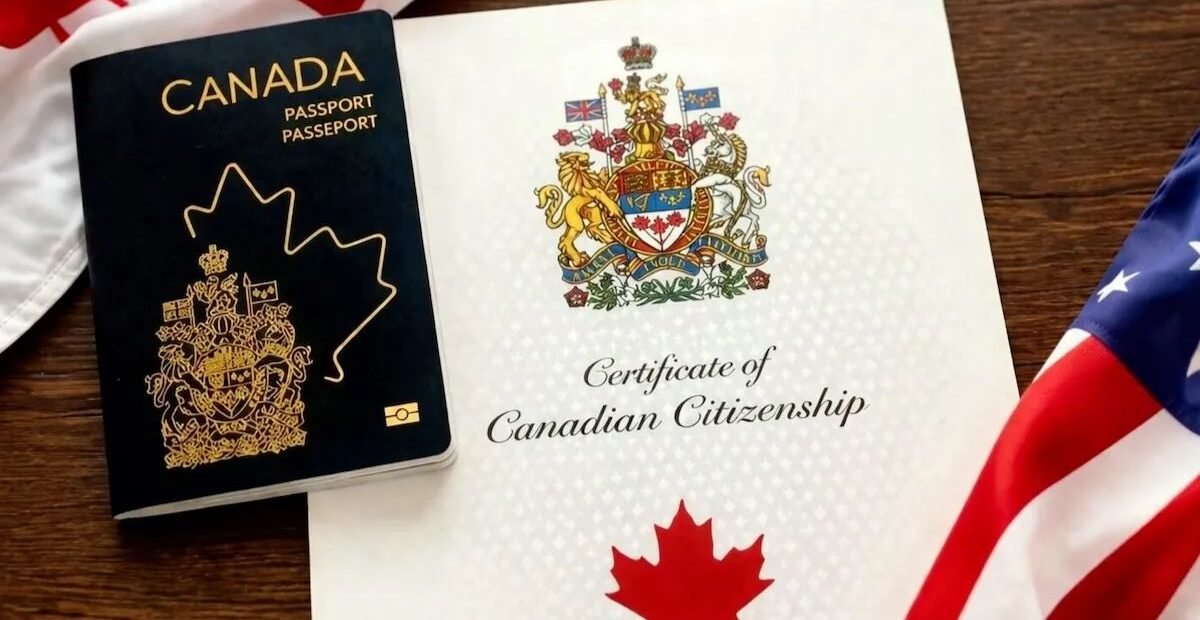
Demand for Canadian Citizenship Certificates Surges, Driven by Americans

Applications for Canadian citizenship certificates have increased sharply in recent months, with thousands of requests coming from people in the United States and other countries following changes to Canada’s citizenship law.
New data obtained by CBC News shows that the number of certificates issued under the federal government’s “Lost Canadian” legislation rose by nearly 50% between April 1 and May 31.
Bill C-3 Expands Citizenship by Descent
Bill C-3 allows more people born outside Canada to claim Canadian citizenship if they can prove they descend from a Canadian ancestor, even when that ancestor left Canada several generations ago.
The legislation was introduced after courts found that Canada’s previous first-generation limit on citizenship by descent was too restrictive.
Between mid-December, when Bill C-3 took effect, and May 31, Immigration, Refugees and Citizenship Canada (IRCC) issued about 6,100 citizenship certificates to people who qualified under the expanded rules.
That compares with 4,075 certificates issued under Bill C-3 between mid-December and March 31.
An additional 17,390 people received citizenship certificates because they have a Canadian parent. Before Bill C-3, people born outside Canada generally needed a Canadian parent to qualify through citizenship by descent.
Altogether, 23,490 people have now been formally recognized as Canadian citizens under these categories.
New Citizens Can Apply for Canadian Passports
Receiving a citizenship certificate allows newly recognized Canadians to apply for a Canadian passport and gives them the right to live and work in Canada.
However, Elections Canada says Canadian citizens who have never lived in the country cannot vote in federal elections. They must have lived in Canada at some point before becoming eligible to vote.
Americans Make Up a Large Share of Applicants
People born in the United States account for almost half of those recognized between mid-December and the end of May.
IRCC data shows that 3,110 Americans received citizenship certificates under Bill C-3, while another 8,125 Americans received certificates because one of their parents was born in Canada.
The figures could represent only a small portion of the eventual demand.
Citizenship Certificate Backlog Climbs Rapidly
The number of citizenship certificate applications awaiting decisions has increased dramatically.
About 56,000 applications were waiting to be processed in April. That figure increased to approximately 70,400 in May.
IRCC’s website now reports that around 121,800 applications are awaiting decisions.
Not every application is necessarily related to Bill C-3. The total also includes routine requests such as replacements for lost or stolen citizenship certificates.
Processing times have also increased significantly. The estimated waiting period was around 12 months in May, but by August 10 it had increased to 25 months.
How Many People Could Qualify Under Bill C-3?
There is considerable uncertainty over the total number of people who could eventually become eligible for citizenship under the expanded rules.
During periods spanning more than a century in the 1800s and 1900s, hundreds of thousands of Canadians, particularly people from Quebec, moved south to the United States in search of employment. Many of their descendants could potentially investigate whether they qualify.
The Parliamentary Budget Officer has estimated that approximately 115,000 people could be affected by the legislative change.
Last October, Immigration Minister Lena Metlege Diab told the House of Commons immigration committee that officials expected applications to reach the tens of thousands over time but did not anticipate a sudden surge.
A spokesperson for the minister, Taous Ait, said IRCC prepared for Bill C-3 before its implementation and continues to monitor application volumes while adjusting operations when necessary.
IRCC has not changed its documentary requirements but has worked to make information about required evidence clearer for applicants.
Genealogical Record Requests Increase Across Canada
The citizenship changes are also putting pressure on Canadian archives.
Applicants seeking citizenship through older Canadian ancestors may need historical records proving an uninterrupted family connection to Canada.
Alyssa Hyduk, president of the Association of Canadian Archivists, said some institutions have experienced increases of 100% to 300% in genealogical record requests.
In some cases, archivists are being asked to locate documents that are hundreds of years old.
Finding these records can require staff to manually search boxes of documents, historical church archives, handwritten records, microfilm and old ship manifests.
Many of these records have never been digitized or indexed, meaning archivists cannot simply conduct electronic searches for family names.
Archivists Say Growing Demand Is Affecting Other Work
The increase in citizenship-related research is also delaying other requests from members of the public.
Mab Coates-Davies, executive director of the Association of Canadian Archivists, said genealogical cases can also carry an emotional dimension because they often involve family history and major decisions about where applicants may eventually live.
Archivists have also raised concerns that the type of documentation accepted by IRCC continues to evolve.
During a recent meeting with the association, IRCC reportedly did not provide a permanent list of acceptable documents because those requirements could continue changing.
Archives Call for Additional Funding
The Association of Canadian Archivists is calling for greater financial support for archives dealing with the increased workload created by Bill C-3.
The rise in demand comes after the government ended Library and Archives Canada’s $1.5-million-per-year Documentary Heritage Communities Program, which had supported many small and medium-sized archives.
Coates-Davies said the funding reduction arrived at the same time archive workloads were increasing significantly.
Suspended Citizenship Certificates Could Create Another Wave of Requests
Archivists are also preparing for another possible increase in requests following the suspension of some citizenship certificates.
In June, IRCC suspended an estimated 100 certificates after identifying concerns about documents submitted with certain applications.
IRCC says 83 cases have now been resolved, with those certificates restored.
Another 17 people received procedural fairness letters and were given 60 days to provide additional documents proving their Canadian ancestry.
If acceptable evidence is not provided, their citizenship certificates could potentially be revoked.
New Democrat immigration critic Jenny Kwan said she has received correspondence from people affected by the suspensions and has written to Immigration Minister Lena Metlege Diab seeking answers about the situation.
Bill C-3 has significantly expanded access to Canadian citizenship by descent, leading to thousands of new citizenship certificates and a rapidly growing application backlog.
With approximately 121,800 applications awaiting decisions and processing times reaching 25 months, demand is placing increasing pressure on both IRCC and Canadian archives.
As more descendants of Canadians, particularly those living in the United States, investigate their eligibility, citizenship applications and requests for historical genealogical records could remain elevated.