




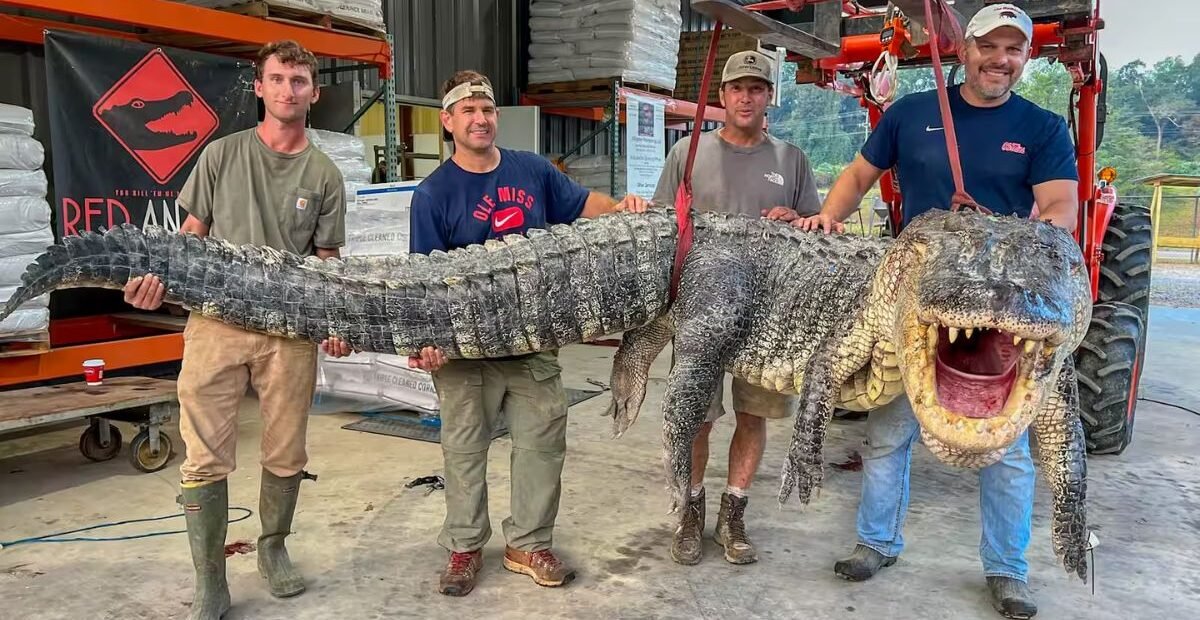
Mississippi River’s Biggest-Ever Alligator Captured in Record-Breaking Catch

The Mississippi River is home to some of North America’s most impressive wildlife, including the American alligator. However, one enormous reptile stood apart after becoming the largest alligator ever captured from the Mississippi River system.
A video feature published by Yahoo.com and produced by A-Z Animals revisited the remarkable story of the record-setting catch, which demonstrated just how large alligators living around the Mississippi can grow.
Alligator Measured 13 Feet Long
The massive alligator was caught in 2013. It measured 13 feet in length and weighed an extraordinary 727 pounds.
Its size placed it in a category of its own and established a new benchmark for alligators taken from the Mississippi River region.
The river system provides highly favourable conditions for these reptiles. Marshes, wetlands, backwaters and slow-moving channels offer protection, abundant prey and enough space for alligators to grow over many years.
Why the Giant Alligator Matters
Exceptionally large animals provide valuable insight into the strength and productivity of the ecosystems supporting them.
When an alligator reaches such an unusual size, it is often the result of several factors, including age, reliable food sources and a suitable habitat.
A giant predator can therefore indicate that the surrounding wetlands remain diverse and capable of supporting complex wildlife populations.
The Mississippi River is more than an important commercial route and scenic waterway. It is also a major natural habitat shared with powerful predators that require awareness, caution and respect.
Large Alligators Highlight the Need for Safety
People living near or visiting Southern waterways should understand that large alligators may inhabit marshes, riverbanks and quieter sections of water.
This awareness can encourage safer behaviour among people who are fishing, boating, kayaking or walking near wetland areas.
Alligators are generally best observed from a considerable distance. People should never approach, disturb or attempt to feed them.
Wildlife Management and Conservation Efforts
Across the southern United States, wildlife authorities work to balance alligator conservation with public safety.
Management strategies commonly include monitoring populations, protecting habitats and regulating hunting. These measures are designed to prevent excessive harvesting while reducing the risk of dangerous encounters between alligators and people.
Residents and visitors should keep pets away from shorelines, remain cautious near still or slow-moving water and stay especially alert around dawn and dusk, when alligators may be more active.
The 13-foot, 727-pound alligator captured in 2013 remains an extraordinary example of the wildlife supported by the Mississippi River ecosystem.
Although alligators of this size are uncommon, their presence demonstrates the importance of healthy wetlands, responsible wildlife management and sensible safety precautions around Southern waterways.