


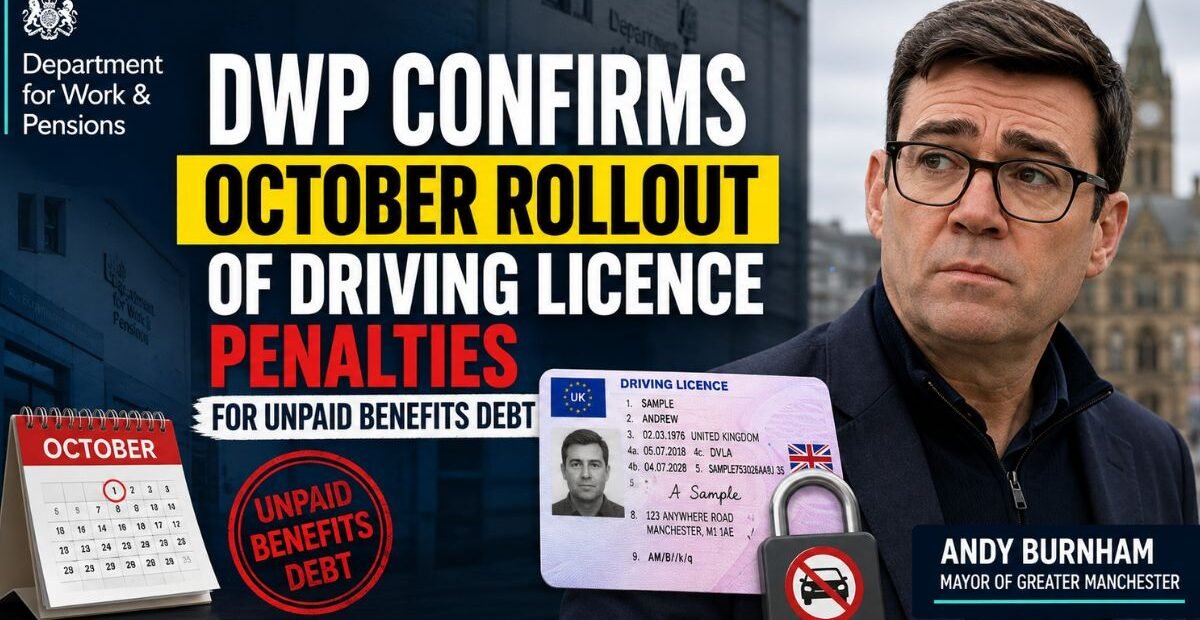
DWP Confirms October Rollout of Driving Licence Penalties for Unpaid Benefits Debt

People who lose their driving licence under new Department for Work and Pensions anti-fraud powers may be able to have it restored without paying an additional DVLA fee if they clear their debt within 56 days.
The new measures, introduced under the Public Authorities (Fraud, Error and Recovery) Act 2025, are due to begin being enforced from October. They form part of a wider government effort to recover money linked to benefit fraud, error and unpaid welfare debt.
DWP to Gain New Powers From October
Under the legislation, the DWP will have stronger powers to recover outstanding debts. These can include taking money directly from certain bank accounts and, in serious cases, applying to a court to have an individual’s driving licence disqualified.
A driving disqualification can last for up to two years under an immediate disqualification order.
The measures are aimed particularly at cases where people have fraudulently obtained benefit payments and have failed to repay money owed after their benefits were stopped.
Universal Credit, Pension Credit and Employment and Support Allowance (ESA) are among the benefits identified as having some of the highest fraud rates.
Drivers Will Normally Receive a Suspended Order First
A person would not usually lose their licence immediately.
The first stage is expected to involve a suspended disqualification order, under which a court sets repayment conditions for the outstanding debt.
As long as the person follows the repayment terms ordered by the court, an actual driving disqualification should not take effect.
However, if payments are missed without a reasonable excuse, the DWP can return to court and seek an immediate disqualification order. If approved, the person could be prevented from driving for up to two years.
How the 56-Day Rule Works
Even after an immediate disqualification order has been issued, a person may still be able to recover their driving licence.
If the outstanding DWP debt is repaid in full, the department must apply to the court to end the immediate disqualification order.
When the order is ended within 56 days of being made, the DVLA can reinstate or return the person’s licence without requiring them to pay another fee.
If the disqualification lasts for more than 56 days, the driver will normally need to apply to the DVLA for a renewed licence and pay the applicable fee.
Ways to Avoid Driving Licence Disqualification
People facing DWP debt recovery may have several opportunities to prevent their licence from being taken away.
Before a suspended disqualification order is issued, they can repay the debt completely or agree to an affordable repayment arrangement with the DWP and continue making the required payments.
Once a suspended order is in place, following the repayment terms set by the court should prevent the disqualification from becoming active.
If an immediate disqualification order has already been made, clearing the debt can lead to the DWP asking the court to terminate the order.
When the DWP Cannot Use Driving Disqualification Powers
The legislation places several restrictions on when a driving licence disqualification can be pursued.
The power cannot normally be used when:
- The outstanding debt is below £1,000.
- The person is entitled to and currently receiving a DWP benefit when the application is made.
- A court decides the person has an essential need to drive, including where driving is necessary for them to earn a living.
The legislation states that driving disqualification should only be considered when the outstanding balance is at least £1,000 and recovering the debt through other reasonable methods is not possible.
Repeated Missed Payments Could Lead to a Two-Year Ban
If someone repeatedly breaches the repayment conditions in a suspended order without a reasonable excuse, the DWP can make another court application.
This can happen when the person misses more than one required payment or fails to make the final instalment.
If an immediate disqualification order is granted, the person can be banned from driving for up to two years.
The DWP has also warned that persistent breaches could result in more than one immediate disqualification order being issued. This means the combined period during which a person is unable to drive could potentially exceed two years, although each individual immediate order cannot last longer than two years.
DWP Must Act When Debt Is Repaid
Once the debt has been paid in full, the DWP is required to apply for the immediate disqualification order to be revoked.
The department will inform the court that the debt has been cleared, after which the court will notify the DVLA that the order has ended. The DWP will also confirm repayment with the individual concerned.
DWP Sending Debt Recovery Letters
People who owe money to the DWP are already receiving letters warning them about possible recovery action and encouraging them to repay what they owe.
The wider legislation allows the government to pursue welfare debts more aggressively, including obtaining money directly from bank accounts in qualifying circumstances without first obtaining a separate court order.
Driving licence disqualification is intended for more serious cases involving people who persistently refuse to repay despite being considered able to do so.
Government Targets £14.6 Billion in Savings
The new measures form part of the government’s wider plan to achieve £14.6 billion in savings over five years through action against fraud, error and debt.
The programme also includes investment in up to 3,000 additional staff and expanded use of data, analytics and investigative capabilities.
Work and Pensions Minister for Transformation Andrew Western said the new powers are intended to pursue people who deliberately avoid repaying debts while continuing to offer affordable repayment arrangements to those willing to cooperate.
The DWP’s new debt recovery powers could ultimately result in some people losing their driving licence for up to two years. However, disqualification is not intended to be the first step, with repayment arrangements and suspended orders providing opportunities to avoid a ban.
The 56-day rule is particularly important for anyone who receives an immediate disqualification order. Paying the debt in full and having the order ended within that period could allow the licence to be restored by the DVLA without an additional renewal fee.