




Full List of Countries Where the Solar Eclipse Will Be Visible

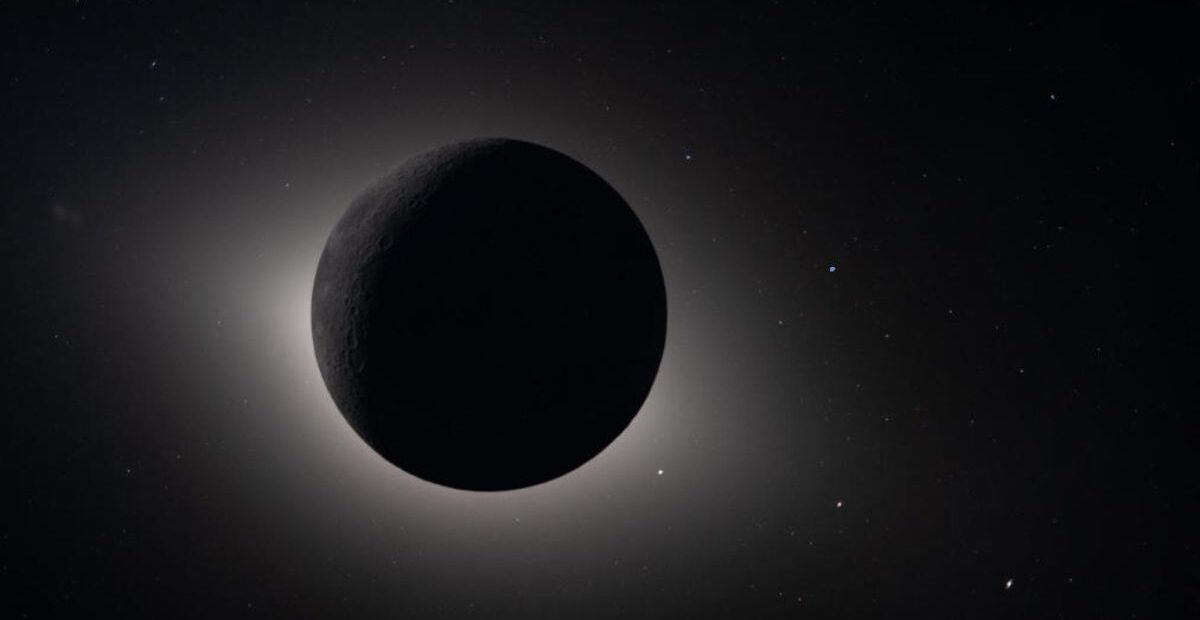
Mainland Spain is preparing for its first total solar eclipse in more than a century, with the dramatic astronomical event expected on August 12.
The eclipse will coincide with other skywatching attractions, including a strengthening meteor shower and a six-planet alignment, creating an unusually eventful day for astronomy enthusiasts.
Daylight will briefly fade across parts of the Iberian Peninsula near sunset as the sun, moon and Earth line up. Totality will also be visible from small areas of Greenland and Iceland.
Totality Could Last More Than Two Minutes
The eclipse path will begin near the North Pole before moving southward. At its longest point, totality is expected to last approximately two minutes and 18 seconds.
The moon’s darkest shadow, known as the umbra, will travel along a path covering about 5,130 miles, or 8,260 kilometres, during roughly 90 minutes. Much of the route will cross the Atlantic Ocean.
Maximum totality will occur off Iceland’s western coast. When the eclipse reaches a small part of Portugal and then Spain, the period of complete darkness will have shortened to around one minute before the eclipse ends over the Mediterranean.
Partial Eclipse Visible Across a Much Wider Region
Millions of people outside the narrow path of totality will still be able to experience a partial solar eclipse.
The partial eclipse will be visible across areas stretching from Alaska and Siberia to Canada, the northern United States, Europe and West Africa.
The amount of the sun covered by the moon will depend on location. Dublin is expected to see around 94% coverage, while Oslo could experience approximately 83%.
Montreal is projected to see about 18% of the sun covered, compared with roughly 9% in New York and around 2% in Norfolk, Virginia.
Observers must use certified eclipse glasses whenever any portion of the sun remains visible.
ESA, NASA and Researchers Prepare for Eclipse
The European Space Agency plans to livestream the eclipse from Spain’s Astrophysical Observatory of Javalambre and will also hold a public event in León.
NASA, the Virtual Telescope Project and other organisations are also expected to provide coverage of the event.
ESA Science Director Carole Mundell described eclipses as more than scientific events, highlighting the connection they create between people on Earth and the wider universe.
Two ESA space telescopes will observe the eclipsed sun and its corona, the sun’s outer atmosphere.
ESA’s Proba-3 mission, which uses two satellites to create artificial solar eclipses, will not be ideally positioned during the natural eclipse but may collect observations before and after totality.
Scientists to Launch High-Altitude Balloons
Research teams from U.S. colleges plan to launch more than 60 high-altitude balloons from Spain and Iceland.
The balloons will examine changes in Earth’s atmosphere as the moon’s shadow passes overhead and temperatures temporarily fall.
The project is led by Montana State University’s Angela Des Jardins and receives funding from NASA.
Researchers previously launched roughly 10 times as many balloons during the 2024 total solar eclipse across North America.
NASA Aircraft to Chase the Eclipse
Southwest Research Institute scientist Amir Caspi will conduct observations aboard a NASA high-altitude aircraft.
Four cameras aboard the plane will study the solar corona using nine different wavelengths.
By travelling at approximately 460 mph, or 740 kph, the aircraft will follow the eclipse path and extend the observing period to nearly three minutes.
Researchers expect each camera to capture thousands of images during the approximately 180 seconds of airborne totality.
Even Longer Eclipse Expected in 2027
Another major total solar eclipse will occur on August 2, 2027, offering significantly more observation time.
The southern tip of Spain will again be positioned along the eclipse path, with totality reaching as much as six minutes and 23 seconds.
The eclipse will then continue across Morocco, Algeria, Libya, Egypt, Saudi Arabia, Yemen and Somalia.
Spain will experience another major astronomical event on January 26, 2028, when an annular or “ring-of-fire” solar eclipse becomes visible.
Spain’s Historic Eclipse Record
Mainland Spain’s previous total solar eclipse occurred in 1912, just two days before the sinking of the Titanic.
However, that event was a rare hybrid eclipse that switched between an annular eclipse and only a brief period of totality in Spain.
Because of this, some astronomers consider the 1905 eclipse to have been Spain’s last major traditional total solar eclipse.
Scientists continue to study both natural and artificial eclipses. ESA’s Proba-3 mission has already generated more than 60 simulated total eclipses during the past two years, including one lasting five hours and 38 minutes.
The August 12 total solar eclipse will offer Spain and surrounding regions a rare opportunity to witness one of astronomy’s most dramatic events.
Alongside public viewing events, satellite observations, balloon experiments and airborne research, the eclipse will also provide scientists with valuable information about the sun and Earth’s atmosphere.
With another exceptionally long eclipse expected in 2027 and a ring-of-fire eclipse arriving in 2028, Spain is entering an extraordinary period for skywatchers.