




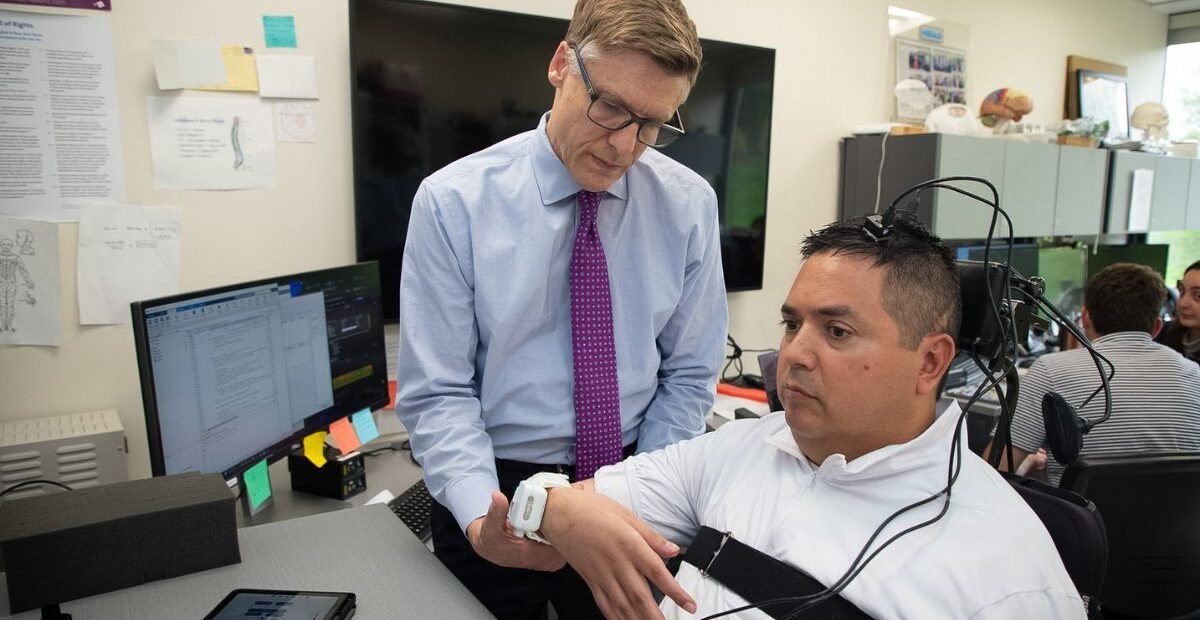
Man With Paralysis Regains Hand Movement and Sensation After Experimental Brain Implant

A 48-year-old man who was paralyzed from the neck down following a diving accident six years ago has regained the ability to sense touch and grasp objects using an experimental brain-computer interface.
Even more remarkably, Keith Thomas has continued to experience improvements in movement and sensation months after the system was completely switched off. Researchers believe the treatment may have encouraged neuroplasticity, allowing his nervous system to form or strengthen new pathways.
Brain-Computer Interface Study Shows Lasting Results
The breakthrough was reported in the journal Nature Medicine on July 16 and represents an important advancement in brain-computer interface technology.
Chad Bouton, a neuroscientist at the Feinstein Institutes for Medical Research in New York and a co-author of the study, said Thomas maintained his improvements even after the equipment had been inactive for several months.
According to Bouton, preserving these gains without continued assistance from the system is highly unusual and could indicate that the treatment produced lasting neurological changes.
Double Neural Bypass Surgery Performed in 2023
Thomas underwent double neural bypass surgery in 2023 as part of a clinical trial led by Bouton and his research team.
During the procedure, researchers implanted five electrode arrays in the motor and sensory regions of Thomas’ brain. These electrodes were designed to record brain activity and deliver electrical stimulation.
Additional stimulation patches were positioned over his spinal cord and forearm to help transmit movement commands from his brain to his muscles.
How the Brain Implant Restored Movement
Whenever Thomas attempted to move his hand or arm, the implanted electrodes detected the associated brain signals.
A machine-learning algorithm then analyzed and translated those signals into electrical commands. These commands activated stimulation devices that helped produce the movements Thomas intended to make.
The algorithm successfully interpreted his brain activity with approximately 85 percent accuracy.
After using the system for 35 weeks, Thomas experienced an 86 percent increase in strength in his right arm and a 62 percent improvement in his left arm.
Pressure Sensors Helped Recreate Touch
Researchers also developed a custom 3D-printed orthotic device equipped with pressure sensors.
When Thomas grasped an object, the sensors measured the amount of pressure being applied. The information was then converted into electrical stimulation patterns delivered to the sensory cortex of his brain, creating an artificial sensation of touch.
The system allowed Thomas to perform meaningful daily activities, including petting his dog, occasionally feeding himself and wiping his face or mouth.
Thomas said the study had dramatically improved his quality of life.
Cortical Mirroring Technique Restored Sensation
The research team introduced another method known as “cortical mirroring” to help restore feeling in Thomas’ hands.
First, the scientists recorded his brain activity while he imagined being touched. They then recreated similar patterns through electrical stimulation of the sensory cortex while simultaneously stimulating his skin and spinal cord.
After approximately 25 weeks of therapy focused on his right wrist, Thomas regained sensation in an area that had previously been completely numb.
Ability to Handle Delicate Objects
Thomas demonstrated his improved touch and motor control by lifting hollow eggshells without crushing them.
He completed the task successfully 87 percent of the time, including while blindfolded. This showed that he was relying on restored sensation rather than visual guidance alone.
Follow-up evaluations found that the improvements remained present for more than two years. Bouton described the continued progress as highly encouraging.
Experts Call for Additional Research
The findings could offer hope to millions of people living with spinal cord injuries. However, scientists have warned that the results come from only one participant and may not be easily reproduced in others.
John Downey, a University of Chicago neuroscientist who was not involved in the research, noted that the procedure included several complex components. This makes it difficult to determine exactly which part of the treatment produced each improvement.
David McGonigle, a neuroscientist at Cardiff University who also did not participate in the study, described the research as an important foundation for future work rather than a final solution.
He said the possibility that Thomas’ nervous system adapted to the therapy was intriguing but had not yet been conclusively proven. McGonigle also described the improvements in movement as particularly impressive.
The experimental brain implant allowed Keith Thomas to regain meaningful movement and sensation after years of paralysis. His ability to feed himself, touch his dog and handle delicate objects demonstrates the technology’s potential to improve everyday independence.
Although larger studies are required to confirm the results, the lasting gains suggest that brain-computer interfaces may eventually help the nervous system recover functions previously considered permanently lost.