




Rare Contagious Cancer Detected in Fish From Quebec and U.S. Lakes

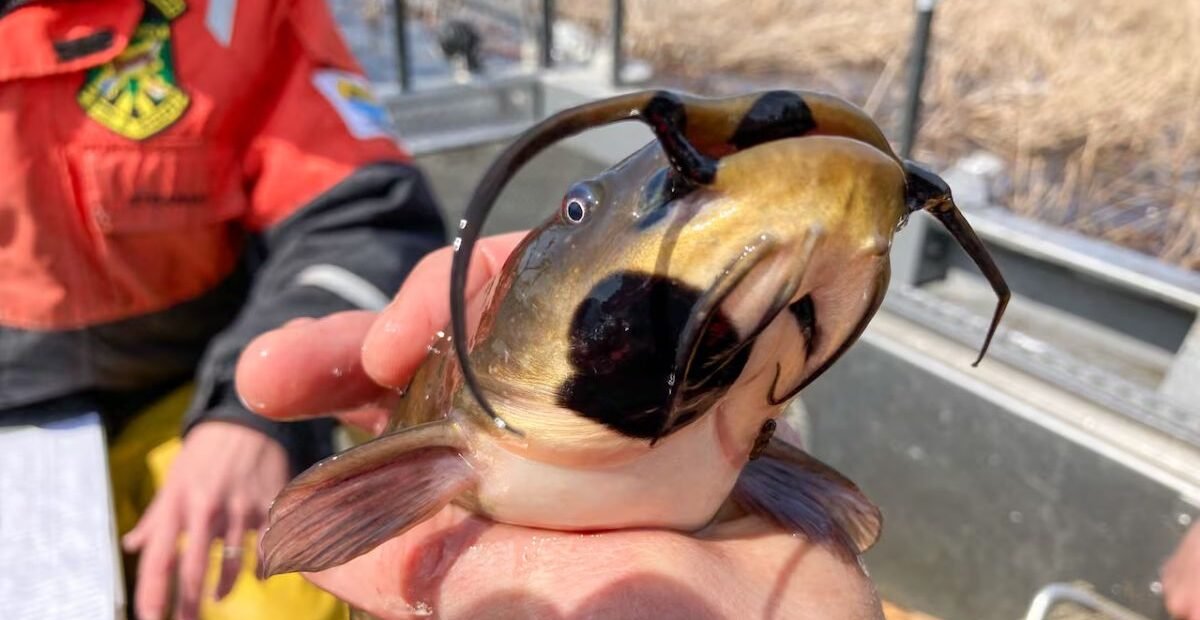
A genetic investigation has revealed evidence of a rare form of transmissible cancer in catfish living in Quebec and parts of the northeastern United States.
The melanoma tumours appear to move between individual brown bullhead catfish, making this the first suspected case of transmissible cancer identified in fish. The findings were published in the journal Nature.
One of the Rarest Forms of Cancer in Nature
Cancer generally develops when an individual’s own cells begin growing uncontrollably. It is extremely unusual for living cancer cells to pass from one animal to another.
Julie Dragon, co-leader of the study and an associate professor of microbiology and molecular genetics at the University of Vermont, said only three other naturally occurring transmissible cancers had previously been identified. These affect Tasmanian devils, dogs and shellfish.
The discovery involving catfish would therefore represent only the fourth known example and the first involving fish.
Tumours Appeared Following a Major Flood
The condition was first noticed in 2012 when anglers at Lake Memphremagog began catching brown bullhead catfish covered with unusual black spots and raised lumps.
Lake Memphremagog crosses the border between Quebec and Vermont. Testing later confirmed that the growths were melanoma skin cancer tumours.
Researchers now estimate that approximately one-third of the lake’s brown bullhead population has developed the lesions.
The effect of the disease on the fish remains uncertain. In some cases, cancer has spread to organs including the brain and liver. However, many affected fish appear relatively healthy. Tumours have also been found on older fish, indicating that some may survive with the condition for an extended period.
Flood Contamination Initially Suspected
The tumours appeared about a year after severe flooding caused by post-tropical storm Irene. This led residents to question whether carcinogenic substances had been washed into the lake.
Tests for cancer-causing contaminants have not produced a definite answer. However, a separate study published in May detected higher concentrations of seven metals in the skin of fish with tumours. These included zinc and arsenic, which is known to cause cancer.
In 2014, Vermont’s Fish and Wildlife Department asked Dragon to investigate whether a virus could be responsible for the outbreak.
Genetic Testing Revealed a Major Clue
Researchers found no viruses in the affected fish.
Dragon then considered whether the brown bullheads had become genetically inbred, potentially making them more vulnerable to cancer. Her team examined genetic material from healthy fish, affected fish and the tumours themselves.
The results showed that the fish population was not inbred and contained considerable genetic diversity.
The most important discovery came from the tumour samples. Normally, cancer cells develop from the affected animal’s own cells and remain genetically similar to that animal.
In this case, the cancer cells were more closely related to one another than to the fish carrying them. This suggested that the tumours may have originated in one fish before spreading as living cancer cells to others.
Sam Hart, a University of Washington researcher who previously studied transmissible cancer in shellfish, proposed that a similar process could be affecting the catfish.
Cancer May Spread During Spawning
Researchers have not yet determined exactly how the cancer might pass between fish.
Dragon noted that the tumours release cells easily and can begin falling apart when handled. One theory is that transmission occurs during spawning.
Adult brown bullheads gather closely together during reproduction and frequently swim over one another. Their sharp spines, located behind the pectoral fins, may create small injuries through which cancer cells could enter another fish.
The fact that the tumours have been found only in adult fish supports this possible explanation.
However, researchers have not yet successfully demonstrated direct transmission between fish, either in the wild or under laboratory conditions. Further experiments are planned.
Some Scientists Remain Unconvinced
Vicki Blazer, the lead author of the study that detected higher metal concentrations in affected fish, has questioned whether the disease should be described as transmissible before scientists prove that it can move from one fish to another.
Blazer, a retired U.S. Geological Survey scientist, is also examining infected fish for PFAS. These long-lasting chemicals could potentially weaken the fish or increase their susceptibility to cancer.
Stephen Goff, a Columbia University researcher involved in previous shellfish cancer research, believes the genetic findings strongly support the transmissible cancer theory, even though he did not participate in the catfish study.
Should Fish With Tumours Be Eaten?
The research received funding from U.S. and Vermont government organizations, including the U.S. National Institutes of Health and the Great Lakes Fishery Commission. Quebec’s Ministry of the Environment also supported the project by helping collect fish for testing.
Quebec authorities recommend avoiding fish that have visible tumours, although there is currently no evidence that eating them poses a risk to human health.
Dragon said some people in Vermont continue to eat affected catfish and that she considers them safe. Nevertheless, avoiding visibly diseased fish remains the more cautious approach.
Similar Cases Reported in Other Lakes
Brown bullhead catfish with comparable tumours have also been discovered in Quebec’s Lake Magog and in several lakes in Maine and New Hampshire.
Anglers who catch fish with black lesions or unusual growths in other Quebec waterways are encouraged to photograph them and contact Quebec’s Ministry of the Environment. These reports can help researchers monitor the possible spread of the disease.
The genetic similarities between tumours found on different brown bullhead catfish provide strong evidence that the cancer may be spreading between individuals. However, direct transmission has not yet been experimentally confirmed.
Further studies will be needed to determine how the disease spreads, whether environmental contaminants contribute to its development and what long-term effect it could have on fish populations across Quebec and the northeastern United States.