


Wildfire Near Clinton, B.C., Expected to Expand as Dry Weather and Stronger Winds Move In

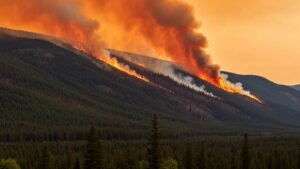
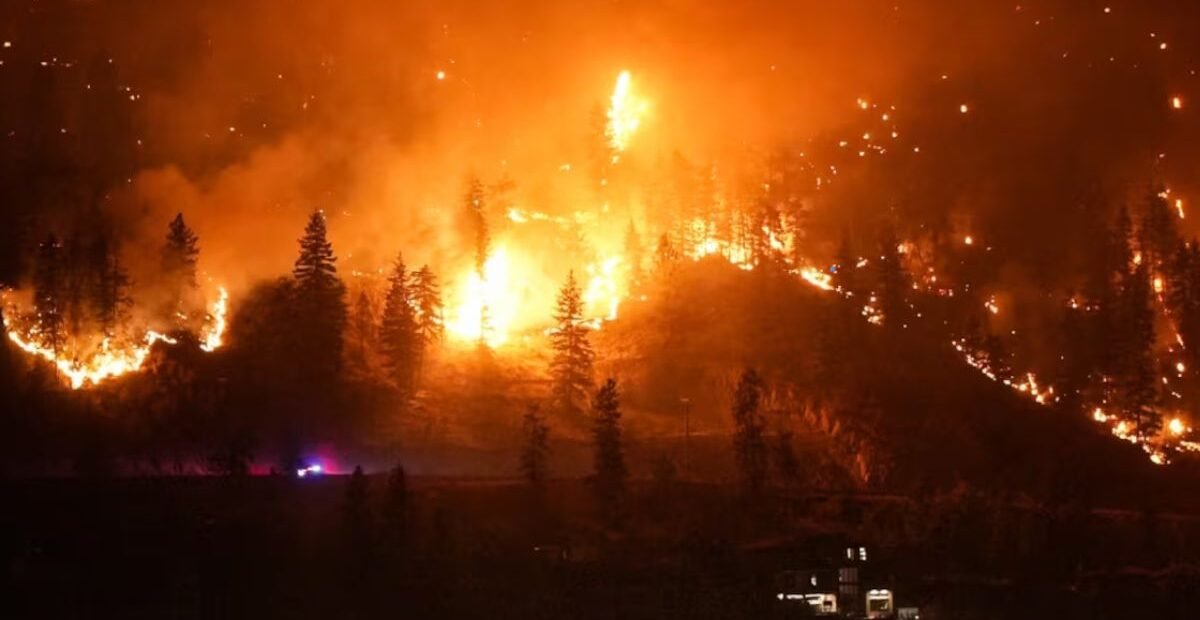
Hundreds of residents are being forced from their homes as an uncontrolled wildfire near Clinton, British Columbia, continues to threaten communities and destroy properties.
Residents of 70 Mile House were ordered to leave immediately on Monday morning. Several hours later, the Cariboo Regional District and the Stswecem’c Xget’tem First Nation issued evacuation orders covering additional properties.
The Pear Lake wildfire, which merged with the Fiftynine Creek fire on Saturday, had grown to approximately 668 square kilometres, or 66,871 hectares, by Monday night. Officials previously confirmed that several homes and businesses had been destroyed.
Clinton Property Destroyed by Wildfire
Chris Webster shared photographs showing extensive damage at his father’s property south of Clinton.
Webster said the situation changed suddenly when his father’s neighbourhood was placed under an evacuation order on Saturday, forcing residents to flee.
During the following 24 hours, the family repeatedly searched for updates while fearing the property had been lost. Webster’s father was later allowed to return briefly and discovered that everything on the property had been destroyed.
He is now staying in Cache Creek while waiting to learn when he can return and whether anything from his life in Clinton can be recovered.
Extreme Fire Behaviour Expected
B.C. Wildfire Service information officer Paula Waldbauer warned that extreme fire activity could continue as hot, dry and windy conditions persist.
Forecasts called for winds between 15 and 25 kilometres per hour, with gusts reaching as high as 50 kilometres per hour.
Officials expect the wildfire to expand along its northwestern section and northeastern corner. Prolonged drought has left vegetation and other fuels extremely dry, increasing the likelihood of further growth.
The fire was discovered approximately 10 days earlier and was caused by lightning during a period when thousands of strikes were recorded across British Columbia.
Brunswick Wildfire Complex Threatens Fraser Canyon
Evacuation orders and alerts also remain active near Boston Bar in the Fraser Canyon.
The Brunswick wildfire complex consists of the Ainsle, Brunswick and Anderson Creek fires. By Monday morning, the combined fires covered approximately 354 square kilometres.
B.C. Wildfire Service reported that cooler temperatures and increased humidity had reduced fire behaviour in the Fraser Canyon on Sunday. Similar conditions were expected to continue during the early part of the week.
However, Highway 1 remains closed in both directions between Spuzzum Creek Road and Jackass Summit. Drivers have been advised to check DriveBC for the latest road information.
Tower Creek Fire Remains Out of Control
In southeastern British Columbia, the Tower Creek wildfire continues to burn out of control.
An evacuation alert for the city of Kimberley was cancelled over the weekend. However, residents along St. Mary’s Lake Road, between Kimberley’s municipal boundary and the Redding Creek Forest Service Road intersection, must remain prepared to leave with little notice.
Fire officials expected increased activity because of continued dry weather and the large amount of available vegetation capable of fuelling the flames.
Across British Columbia, 133 wildfires were burning on Monday afternoon. Of those, 109 were caused by lightning and 17 were classified as human-caused.
Firefighters Arriving From Other Jurisdictions
Additional wildfire personnel are being sent to British Columbia to support local crews.
Twenty-five firefighters from Yukon were scheduled to arrive on Monday, followed by 66 firefighters from Alberta on Tuesday. Another 114 personnel from Mexico are expected to join the province’s firefighting operations on August 3.
Forests Minister Ravi Parmar said the additional crews would allow local firefighters to receive needed rest.
He added that the province is using all available resources while preparing for what could become a difficult conclusion to the wildfire season through August and September.
Clinton Residents Draw on Previous Experience
Wildfire evacuations are familiar to many people living in Clinton. Residents were also forced to leave in 2017 when the Elephant Hill wildfire approached the community.
Resident Erica Achtmer-Novel said the latest evacuation appeared calmer because people understood what they needed to do from their previous experience.
Provincial estimates indicate that approximately 1,600 properties across British Columbia are under evacuation orders, while another 2,900 properties remain under evacuation alerts.
Kamloops Supports Hundreds of Evacuees
Many displaced residents have travelled to Kamloops, where an emergency reception centre has been established at the McArthur Island Sport and Event Centre.
Evacuees can access temporary accommodation, essential supplies and other support services at the facility.
Emergency operations centre director Ken Uzeloc said 460 evacuees had received assistance through the city’s response. Achtmer-Novel was among those who stayed overnight and received essential items, including a blanket and pillow.
Kamloops has regularly served as a support centre for people escaping wildfires in British Columbia’s Interior. Deputy Mayor Dale Bass praised the city’s emergency workers for welcoming displaced residents with compassion and practical assistance.
Drought Intensifies Wildfire Conditions
A recent drought and water scarcity bulletin from the Ministry of Water said rainfall had provided some relief in southern British Columbia, but significant dryness remained.
Streamflows are falling while temperatures continue to increase in the southeast, where much of the province’s wildfire activity is concentrated.
Officials are also concerned about limited water storage in southern areas. Some water supply wells have reportedly been unable to meet demand.
Wildfire researcher Mike Flannigan explained that drought is no longer caused only by a lack of rainfall. Extremely high temperatures can also remove moisture rapidly from soil, vegetation and dead material on the forest floor.
Between July 6 and July 25, daily maximum temperatures in Kamloops ranged from 27°C to 38.1°C, according to Environment Canada. No rain was recorded during that period.
Similar hot and dry conditions have affected other parts of British Columbia’s Interior, particularly communities experiencing intense wildfire activity.
Residents Urged to Prepare for Sudden Evacuations
Flannigan advised everyone living in wildfire-prone areas to keep an emergency bag ready because conditions can change quickly.
Residents should also take FireSmart precautions when it is safe to do so. Recommended measures include removing dry grass, branches and other combustible vegetation from around homes.
Where possible, homeowners can also reduce their risk by replacing vulnerable building materials with more fire-resistant alternatives.
Fire is a natural part of Canadian forest ecosystems. However, experts warn that human-caused climate change is contributing to more frequent and severe natural disasters, including destructive wildfires.
Wildfires across British Columbia have forced thousands of residents to prepare for evacuation, while hundreds have already left their homes.
With drought, extreme heat and strong winds continuing to fuel dangerous conditions, officials are bringing in additional firefighters and urging residents to remain alert, prepared and ready to leave quickly.